This page will talk about an Arab OpenUniversity in general then it will review about AOU Sudan and Egypt, and it will discuss it is history missions and achievements. Also, It will review the courses, learner supports, and types of technologies they provide.
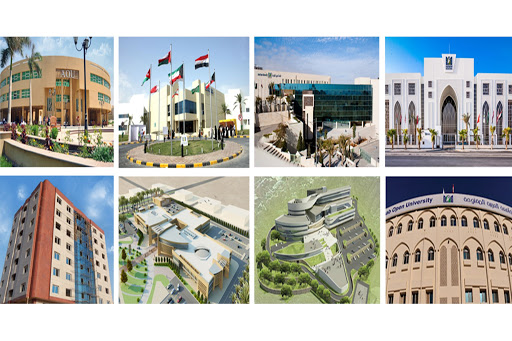
Arab Open University (AOU)
History of AOU
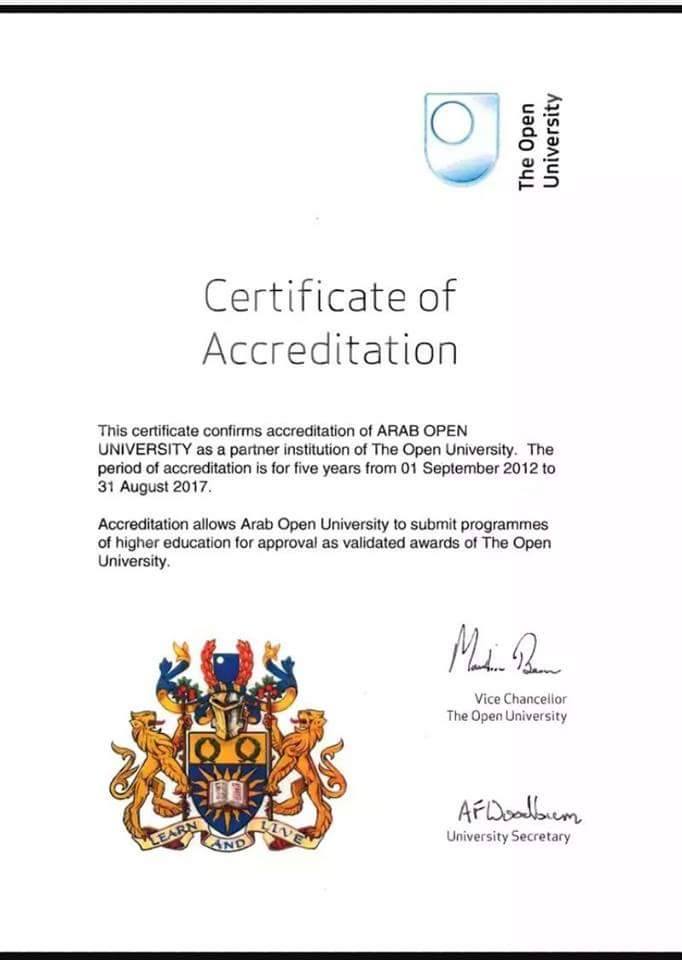
The Arab Gulf Program for United Nations Development Organizations (AGFUND), Prince Talal Bin Abel Aziz decided to take a step to establish the Arab Open University in 1996. In 1998, the idea of AOU was officially introduced in Beirut to a UNESCO regional conference. In the same year, 5 Arab states (Bahrain, Egypt, Lebanon, Kuwait, and Jordan) hosted the AOU. In 2000, AOU’s Egypt branch was established along with Bahrain, Kuwait, Lebanon, Jordan, and Saudi Arabia branches.
In 2007, the seventh branch was established in the Sultanate of Oman. Also, in 2013 a new branch was established in the Republic of Sudan. The AOU Palestine branch was the most modern and latest in 2017.
In 2002, the AOU officially began the scientific activity with the beginning of the academic year in Egypt, Bahrain, Kuwait, Lebanon, Jordan, and Saudi Arabia. Furthermore, the academic year started in 2007 in the Oman branch. The Sudan branch began in 2013, and lastly, the Palestine branch started in 2018.
Vision and Mission
Vision: Arab Open University committed creating knowledge in society.
Mission: Spreading knowledge, and create expertise according to the international standards of quality, and building and creating awareness in society.
The AOU unique system:
The AOU learning policy mixed between face to face instruction and self-instructional textbooks planned by OU (UK) for distance learning (e-learning). The textbooks and all the IT learning materials are designed to meet the needs of the local and international market as well. Less than 30% of the student attendance is required, most of the learning can be online, which provides an opportunity to obtain higher education to the women who are married and have family responsibilities, students who have work and time constraints.
AOU Goals
• Giving opportunities for students to achieve a high quality of education.
• Providing training opportunities for the students that are suitable for market demands.
• Providing unique opportunities in higher education to disadvantaged groups (e.g., housewife and those residing in rural areas).
• Providing space for continuing education over the region.
• Strengthening compassionate and Islamic values and ethics.
Admission:
To be accepted to any BA/BSc program in AOU, the student should have a general high school diploma or its equivalent. Student should prepare the following documents when they admit to the university: A copy of the student’s high school diploma or its equivalent, copy of ID or passport/labor card, four photos. Also, some AOU braches have master degree courses.
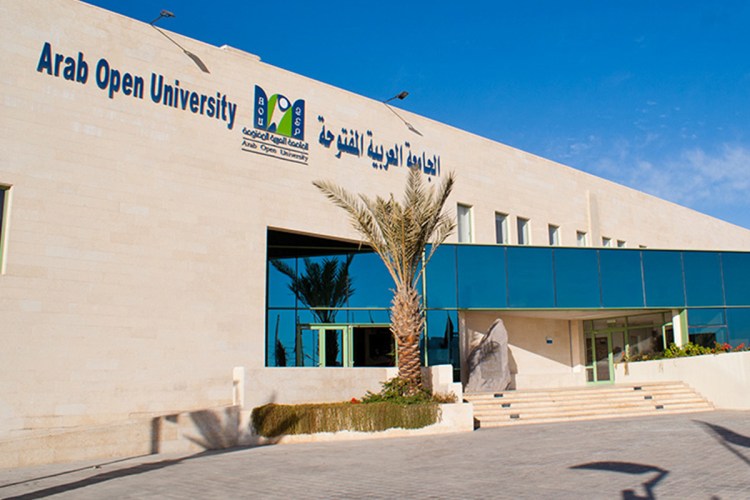
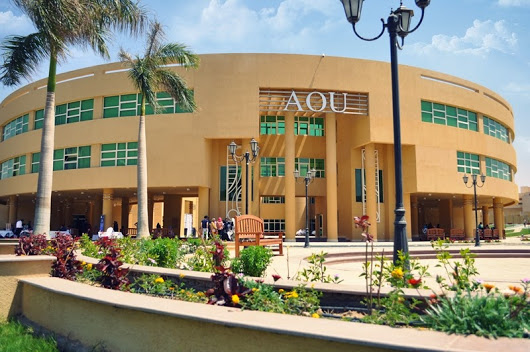
AOU in Egypt and Sudan
Learners support:
The AOU monitors try to ensure that the AOU had high-quality learning for students. The AOU monitors assess the university’s student services, teaching method, and system. The students need to complete 132 credit hours to get their bachelor’s degree.
All the AOU branches offer four bachelor’s degree programs:
Bachelor’s degree in Business Studies (Finance / Microfinance, Human Resources, Management, Systems, Economics, Marketing, Accounting).
Bachelor’s degree in IT and Computing (Information Technology and Computing, Information and Communications Technology, Computing, Computing with Business, Development (WD),Bachelor’s degree in IT and Computing (Information Technology and Computing, Information and Communications Technology, Computing, Computing with Business, Development (WD),
Security and Networking (S&N).
Bachelor of Literature and English Language Translation.
AOU Egypt offer one bachelor’s degree program is not in other branches:
Bachelor’s degree in media (Electronic Media, Radio & Television,Public relation & Advertising)




Learners support:
- Designing Learning Materials: One of the ways to ensure quality is designing learning materials. Designing learning materials is the duty of the dean of the university. Qualified, skilled academic professors from inside and outside the university are in-charge of designing the courses. Ensuring that the courses are meeting the needs of the local and international market as well. Also, ensuring that all written, audio, and visual learning material adhere to Islamic values.



Master degree courses offered in AOU Egypt:
- Master degree in English literature
- Master of business administration mba
- Master of business administration MBA
- Professional Diploma in Kindergarten
- Professional Diploma in Kindergarten
Master degree courses offered in AOU Sudan:
- Masters of Science (MSc) in Computing (Software Development),
- Masters of Science (MSc) in Computing (Information Security and Forensics)
- Postgraduate Professional Diploma in Computing (Software Development)
- Postgraduate Professional Diploma in Computing (Information Security and Forensics)
Learners support:
- Managing and Monitoring of Instructors: AOU is taking care to ensure that the instructors are qualified to deliver a high quality of education and experience to the students. Instructors are trained with the required skills to teach effectively to the students. The course coordinator observes the instructors’ face-to-face lessons. Moreover, the instructors’ feedback and grading are also observed.
AOU has four local faculty programs:
- Faculty of Education offers a Bachelor of Education (B.Ed) for intermediate and Secondary Stages.
- Faculty of Language Studies offers Bachelor’s (Electronic Media, Radio and Television, Media –Public Relations, Media – Electronic MediaTrack, Media – Electronic Journalism).
- Faculty of Information Technology and Computing Studies offers Bachelor’s (Graphic and Multimedia Design Technology.
- Faculty of Business Studies offers bachelor’s in accounting (Arabic). In addition to the newly introduced Bachelor program in Law.
- And in AOU Egypt, faculty of Media and Mass Communication (Electronic Media, Radio & Television,Public relation & Advertising)
 Africa open universities